
A team of scientists has identified a 'potentially dangerous' proglacial lake at 16,500 feet in Arunachal Pradesh's Mago Chu basin, a critical headwaters region of the Brahmaputra, warning of a possible Glacial Lake Outburst Flood (GLOF) due to rapid glacier transformation.

In Professor Sulochana Gadgil's passing, India has lost a scientific giant, a fierce intellect, and a compassionate soul, remembers Dr Madhavan Nair Rajeevan.

India sent an aquanaut 5,000 metres deep into the ocean in a first-of-its-kind expedition in partnership with France, as part of preparations for India's ambitious Deep Ocean Mission.
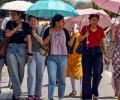
The year 2024 was the hottest year on record, with the global average temperature exceeding 1.5 degrees Celsius above pre-industrial levels for the first time, according to the European climate agency Copernicus. Every month from January to June was the warmest ever recorded, and from July to December (except August), each month was the second warmest on record. Scientists are warning that the world is entering a new climate reality, with extreme heatwaves, floods, and storms becoming more frequent and severe. The report also highlights the failure of developed nations to meet their climate finance commitments to developing countries, despite the urgency of the situation.

The India Meteorological Department (IMD) has predicted above-normal rainfall for the upcoming monsoon season in India (June to September). The cumulative rainfall is estimated to be 105 percent of the long-period average. The IMD has also ruled out the possibility of El Nino conditions during the entire season. The monsoon is crucial for India's agriculture sector, which supports the livelihood of a significant portion of the population and contributes substantially to the country's GDP. However, while the prediction of normal rainfall brings relief, climate change is expected to cause variations in rainfall distribution.

The year 2024 was not only the hottest year on record but also the first to breach 1.5C above the 1850-1900 baseline.
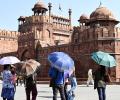
'The intensity and frequency of heatwaves will be much higher than in previous years over Punjab, Haryana, Rajasthan, Gujarat, Madhya Pradesh and Odisha.'

A new study by IIT-Kharagpur warns that ozone pollution could significantly reduce agricultural yields in India, particularly impacting wheat, rice, and maize production. The study, published in the journal 'Environmental Research', highlights the vulnerability of major food crops to rising surface ozone levels, especially in the Indo-Gangetic Plain and Central India. The researchers call for effective emission reduction strategies to mitigate these risks and ensure global food security.

'It concerns the sea and the security of the nation. What has happened is a big tragedy.'

The independent group of scientists and communicators previously said that winters are quickly transitioning into summer-like conditions in north India, shortening the spring season.

From a few rain gauges in 1875 to rivalling the world's best weather agencies, the India Meteorological Department (IMD) has weathered its way to becoming a global leader in forecasting.

'When there is a change in the wind speed or the stress exerted on the surface, it will change the ocean currents.'

'Nobody asked us to work on this. It was on our own that we decided to embark on this journey.'

Climate change has hampered the ability of the forecasting agencies to accurately predict severe events and weather bureaus across the world are focusing on augmenting the observational network density and the weather prediction modelling to improve predictability, India Meteorological Department (IMD) Director General Mrutyunjay Mohapatra has said.

What are the most worrisome aspects of climate change for India? Can they be solved?

The study was published in the journal Science.

The experts said that climate change is not only raising temperatures and making India's heatwaves hotter, but also changing weather patterns that further drive dangerous weather extremes.

Other measures being considered for 'geo-engineering' the Earth's climate include producing lighter coloured crops and using iron filings in the world's oceans, The Guardian reported, citing leaked papers from the UN science body.

As weather patterns grow more unpredictable due to climate crisis, India is taking a giant leap with "Mission Mausam" to improve weather understanding and forecasting through expanded observation networks, better modeling and advanced tools like AI and machine learning.

Prime Minister Narendra Modi on Sunday told scientists that the government would make it easier to do scientific research in the country and asked them to keep the five principles of economy, environment, energy, empathy, equity at the centre of enquiry and engineering.

ISRO chairman S Somanath said the success gave the space agency "greater confidence," as the GSLV will be next deployed in the NISAR mission, a collaborative effort with the US' NASA.

As the world grapples with extreme weather events and climate change becomes the buzzword of contemporary times, author Amitav Ghosh says the crisis has been in the making since the 17th century and it is imperative to take into account history before beginning to tackle the issue.

Researchers said that the slowing down could change the length of one day on the Earth by fractions of a second.

'Keeping the global temperature below not just 1.5 degree Celsius, even 2 degree Celsius is beyond our reach now. Both are impossible.'

The new year will witness two unmanned missions under the "Gaganyaan" project, deep ocean exploration project, "Samudrayaan" and many more.

Images that should keep you grinning for days on end.

Beyond a point, competition is boring. The fun is in the doing, irrespective of outcome. By the time I was in college, I knew I valued awareness more than success, notes Shyam G Menon.

So far, major emitters are far from curbs on emissions on a scale outlined by the IPCC.

Cyclone 'Biparjoy', the first storm brewing in the Arabian Sea this year, has rapidly intensified into a severe cyclonic storm, with meteorologists predicting a 'mild' monsoon onset over Kerala and 'weak' progress beyond southern peninsular under its influence.
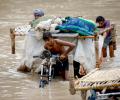
The El Nino impact on the Indian monsoon typically manifests by way of extended break in rainfall.

India-France synergy is poised to open vistas of collaboration between the two countries, notes Rup Narayan Das.

'When so many noted universities -- including the likes of Harvard and the University of California -- are spending their resources on studying the world of GoT, it is fun to assess whether this fictional universe conforms with the laws of our real universe,' says Kumar Abhishek.

The study revealed that the rise in temperatures leads to a decline in the transmission of the virus.

In the 30-year period between 1986 and 2015, temperatures of the warmest day and the coldest night of the year have risen by about 0.63 degree Celsius and 0.4 degree Celsius, respectively.

The research, published in the journal Proceedings of the National Academy of Sciences, found that a significant portion of this ocean plastic debris is expected to make its way onto either beaches or the seabed within three to four years.
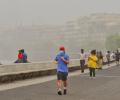
La Nina, construction worsen air quality; spike in respiratory ailments.

The NRSC satellite imagery revealed that the lake covered approximately 162.7 hectares. Its area increased to 167.4 hectares on September 28 but drastically reduced to 60.3 hectares.
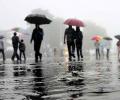
India will receive normal monsoon this season, country's meteorological department said on Wednesday in its forecast for the Southwest monsoon that covers 75 per cent of the country, and thereby may bring much-needed respite to the economy, which is reeling under the catastrophic effect of the Covid-19 pandemic.

Bibhu Prasad Routray explains why the US is supporting Japan's resolve to release 'treated' radioactive waste water into the Pacific Ocean. And what role China plays in the US decision.

"Built on what was a series of islands, the city's historic downtown core is particularly vulnerable," the NYT said.
 © 2026 Rediff.com - Advertise with us - Disclaimer - Privacy Policy - Sitemap - Feedback - About us - Terms of use - Grievances